EVIL DEAD 2:
The title sequence as well as the some of various special effects featured, was designed by Katherine Kean, who is also responsible for the opening titles of John Carpenter's The Thing (1982). The sequence features plenty of interesting special effects using many different types of methods to achieve different effects. Stop-motion, tradition animation and the use of green screen.
The beginning features a fog, with ominous music playing. An object appears to haphazardly move closer to the screen from the fog, and it appears to be the Necronomicon Ex Mortis upon stopping, and which the narrator later describes to us. An interesting special effect appears, where the 'face' of the book appears to bulge, and then eyes and numerous teeth appear where appropriate, before the camera zooms into its mouth (very cheesy looking though.)
After zooming in, there appears to be a vortex of sorts swirling in the background, accompanied with the continuing narration and a slight change in music, where it seems more prominent and creepy. Various bizarre and creepy creatures (called Deadites) appear to fly out of the vortex towards the screen, with strange shrieks, giggles and growls being heard alongside the passing Deadites.
The screen begins to turn red, before the vortex fades out and reveals an ocean of blood, with a thunderstrike-like noise appearing alongside the transition. An open Necronomicon fades into the shot, and using impressive stop-motion, bizarre 'demonic writing' and creepy illustrations are quickly drawn onto the quickly turning pages. The writing and drawings appear faster, the pages turn quicker, and then the book slams shut with a long *thud*, before flying off haphazardly (yet again) off screen. The screen then fades to black.
The music changes yet again, to more creepy and 'bombastic' music as the main titles appear. The fog from the start of the opening returns more aggressively, with loud 'rushing' wind sound effects playing with the 'bursts' of fog. The fog morphs into text, the credit for the film. The only credit of the opening appears:
"RENAISSANCE PICTURES PRESENTS"
The only reason there are no credits for actors or directors is because this film is quite low budget and the people behind it were not as big at the time. Sam Raimi (the director) has gone on to become a much more popular and well-known director nowadays (Evil Dead Trilogy, Darkman, Spider-Man Trilogy, Drag Me To Hell, Oz: The Great and Powerful, etc...), but at this point, Evil Dead 2 was the third 'proper' film he directed (after The Evil Dead and Crimewave, and various Super 8 films he made with his friends and family that aren't important), and he was only well known for Evil Dead. Bruce Campbell (the main star) also 'suffered' the same fate. He hadn't been in much by that point, other than for the first Evil Dead) and wasn't as well known as he is today, so he, nor anyone else, was mentioned in the opening credits.
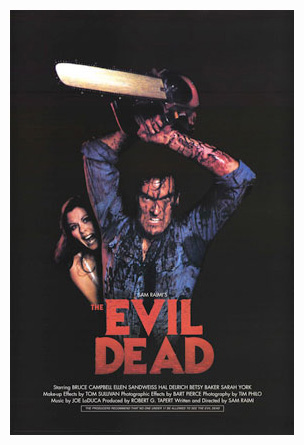
After the credits, the text is slowly fades out and turns back into the fog, the fog blows around again, and the main titles reading "EVIL DEAD" appear on screen, using the typeface similar to that used in various promotional materials for the first Evil Dead film.

BULLITT:
These opening titles were designed by Pablo Ferro who, like Saul Bass, is one of the most well known movie title designers of all time. These opening credits play during the 'actual' start of the film, where the plot begins. The credits are accompanied by the "slick" and "cool" music by the legendary Lalo Schrifin. The film starts with the 'Warner Bros. - Seven Arts emblem shape fading into the establishing shot of San Francisco at night time, before the 'W' and '7' are 'drawn' into the emblem.
The opening then cuts to a close up of a lamp, with a round shape and reflective material, so we can see some of the scene where the opening is set. We see slight movement in the darkness. Due to the strange, unnatural movement, we are unaware of whether it was a person or moving lights that we saw. Text displaying the main stars name (Steve McQueen) appears onscreen, and as the camera zooms out, the text moves upwards, yet a non coloured version of the text with some footage behind it remains after the white text leaves the shot. This text then zooms into the screen, showing us the next shot. The text is overlayed above the next shot, and it moves into the screen to fully reveal the next shot. This is an incredibly creative way of transitioning between scenes.
After transitioning to the next shot, the title fades in over footage of various men 'hiding in the shadows' with light underneath their faces, giving them a creepy and mysterious feel. We also might know that these people are the villains. As previously stated, they are shrouded in shadow, which may mean they were the moving objects from earlier, so it seems that they may be somewhere where they should't be, and they might do something bad as well. After the panning shot of these mysterious people, the "BULLITT" text slides out similarly to earlier, transitioning to the next shot, showing a panning shot from the same location, so we know where the scene takes place more clearly rather than just seeing the location the distorted image off a lamp. "ROBERT VAUGHN" is the next name shown, and after that, the next shot shows the name "JACQUELINE BISSET". These three are the only cast names that appear individually, probably in order of both popularity and relevance to the story. McQueen is the star of the film and the most popular of the cast, Vaughn is a fairly major character to the film and is also well known, especially for his work in "The Man From U.N.C.L.E." series. Bisset is the main characters girlfriend, but she also wasn't a particularly big star at this point, but was very popular for her earlier roles in films such as "The Detective" and others, where she ended up getting awards for and where she was believed to be one the biggest newcomers of the year (1968?).
The cast credits after this show 4 at a time, and the titles don't have a similar transition effect like the earlier credits, but these titles instead slide offscreen to the sides (with a couple going opposite ways to another) and there is no 'fancy' transition effect, but instead, other credits just fading in playing over a long lasting shot panning across fairly close up objects in the room. This shows these cast members have less relevance to the story compared to the previously shown stars. After these credits, the text "featuring" fades in and shows the other less relevant cast members in a text scroll from bottom to top (like tradition end credits). After these cast members pass by, the other filmmaker credits aside from the cast appear on screen, scrolling from right to left (and vice versa). In the first instance, only the role of the person scrolls across the screen, with the person responsible fading in and out of the shot underneath the sliding credits. After the shot ends (revealing a couple names), we see more credits which now has both the role and the name sliding in from both ends, with more interesting footage playing, showing some kind of robbery. During this scene, credits start scrolling from all sides at some point, with a fairly similar structure to how previously mentioned title sequences (like Gone Girl) are presented, but with the music appearing much closer to the end/more important roles such as producers, screenwriters, what the film was based on and such. This might imply that the musician was fairly important to the film, or maybe that Lalo Schrifin was very popular back then so he appeared later to seem more important or to be a 'bigger reveal'.
When the title of 'Executive Producer' appears back on screen, it brings back the transitional effect from early on in the credits (when the title and early cast was shown). The next two credits (Producer and Director) also retain this. The film may be trying to signify that these credits, alongside the main cast, are the most important to the film. After the last credit; "DIRECTOR - PETER YATES" appears, it transitions into next scene, after the title sequence where the rest of the story will take place.

No comments:
Post a Comment